



Estimated reading time: 6 min · Updated November 16, 2026
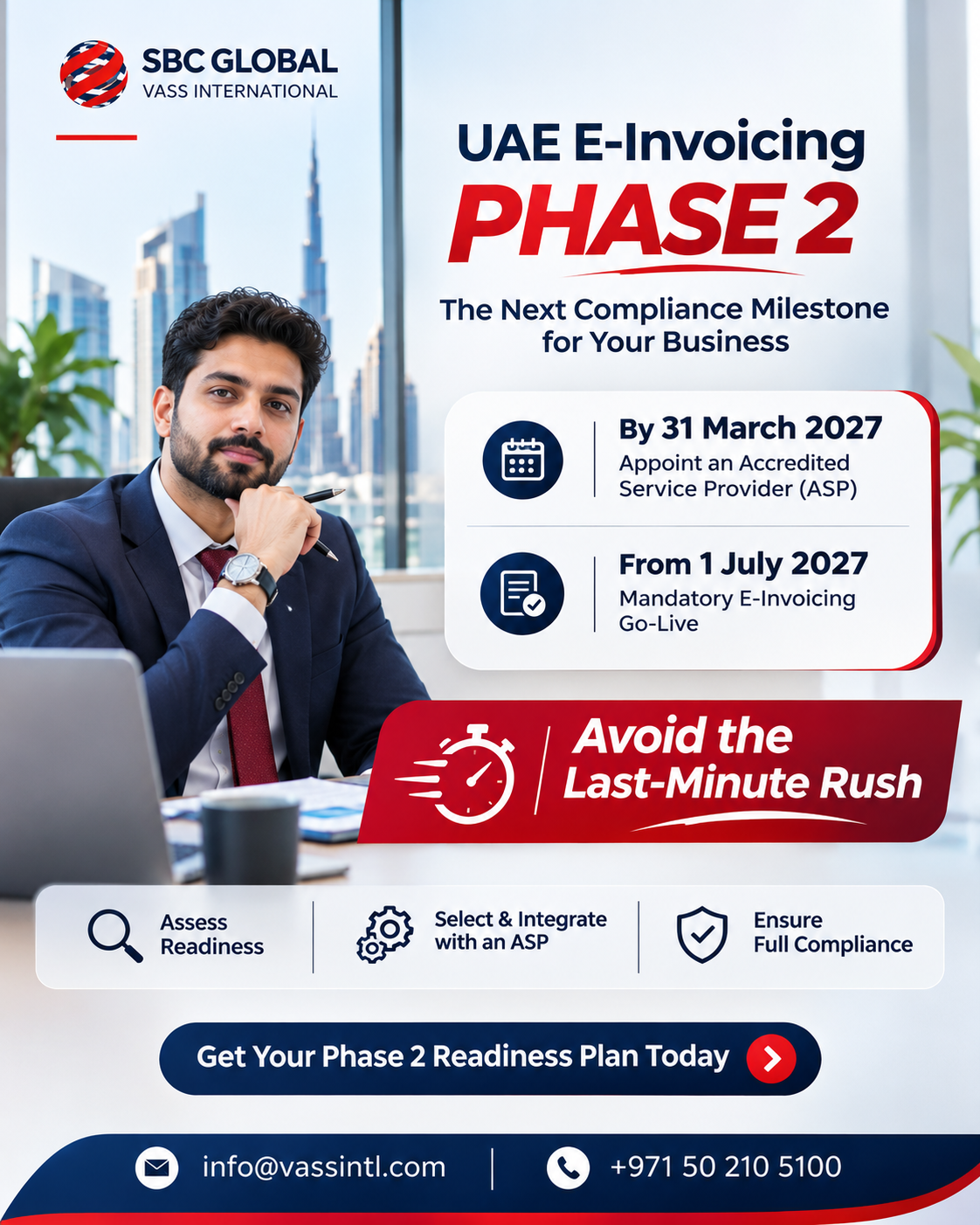
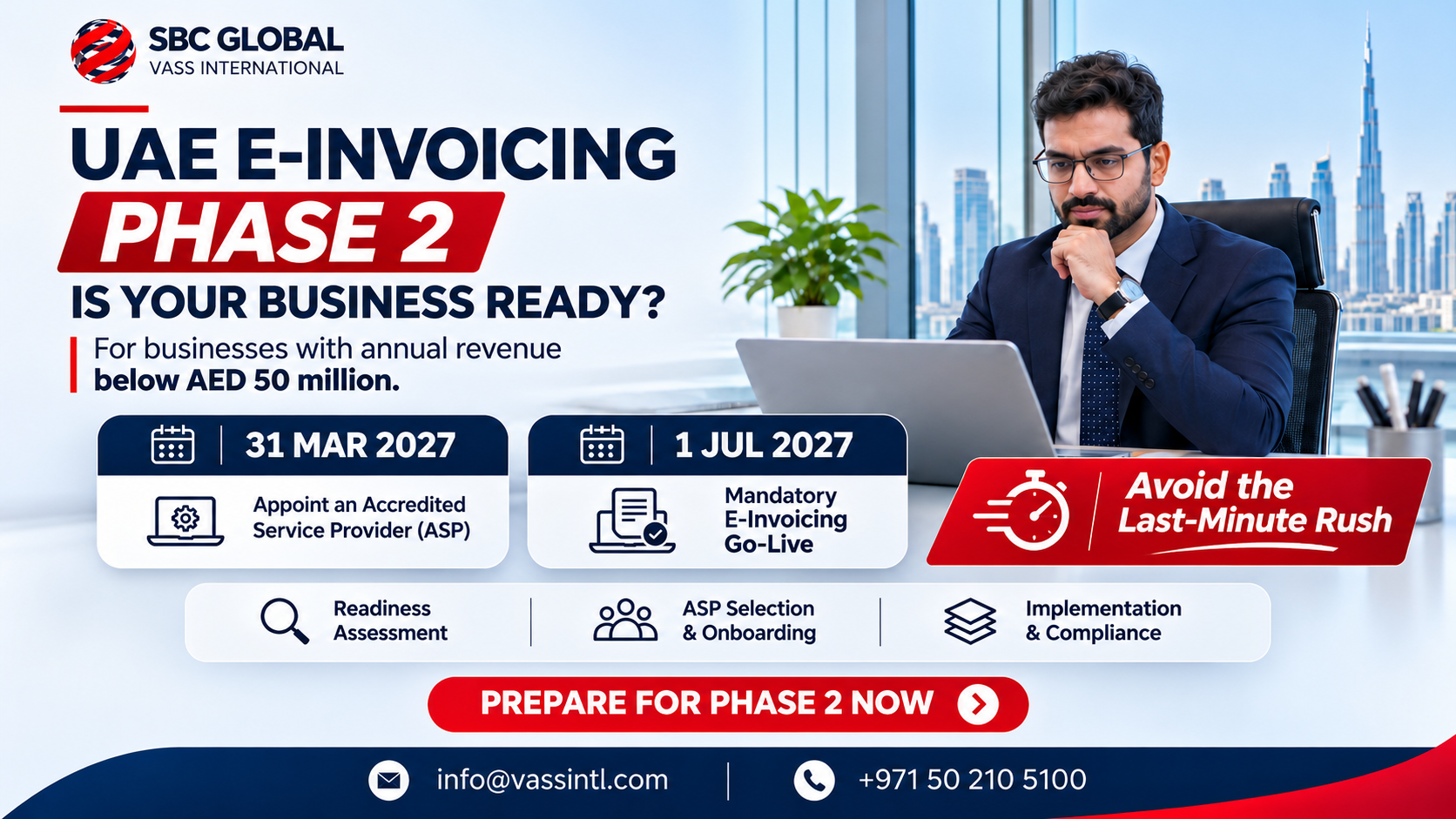
The UAE e-invoicing readiness checklist has become a practical finance priority, not just an IT project. The Federal Tax Authority (FTA) says businesses with annual revenue below AED 50 million that are subject to the system must appoint an Accredited Service Provider (ASP) by 31 March 2027 and implement e-Invoicing by 1 July 2027. Businesses with annual revenue of AED 50 million or more have an earlier implementation date of 1 January 2027, with the ASP appointment deadline of 30 October 2026. Read the FTA’s current e-Invoicing guidance and deadlines.
The important point for finance leaders is that implementation is not simply replacing PDF invoices with another file format. UAE e-Invoicing uses structured invoice data exchanged through Accredited Service Providers and the five-corner model. The FTA specifically states that PDFs, Word files, images, scanned copies and emails are not e-Invoices. See the FTA definition and framework.
Read this first: your 2027 preparation window
Below AED 50 million annual revenue: appoint an ASP by 31 March 2027 and implement by 1 July 2027.
AED 50 million or more: the FTA states that the ASP appointment deadline was 30 October 2026 and implementation is due by 1 January 2027.
UAE e-invoicing readiness checklist: start with scope, not software
Before comparing vendors, finance teams should establish whether the business falls within the UAE e-Invoicing framework and which transactions are relevant. The FTA explains that the framework covers business transactions within its legal scope, with specific exclusions. It also states that a business making only B2C supplies may still have an obligation if it receives supplies resulting from B2B transactions. Check the FTA FAQ.
Revenue also matters because the phased timetable is based on the person’s annual revenue. The FTA states that “Revenue” means the gross income earned during the most recent Accounting Period based on financial statements prepared under applicable UAE legislation or, where such statements are unavailable, other documentation acceptable to the FTA.
Review legal scope, transaction types, exclusions and the business’s revenue position.
Document how invoices are created, approved, issued, received, corrected and reconciled.
Identify missing master data, tax fields, customer endpoints and integration dependencies.
1. Build an invoice and master-data map
Start with the information that will actually move through the e-Invoicing process. Finance and IT should jointly document the source of customer, supplier, product, service, tax and accounting data. Pay particular attention to fields that are currently entered manually or corrected after invoice generation.
A useful mapping exercise should cover:
- customer and supplier master data;
- tax registration and VAT-related information where applicable;
- invoice numbering and document types;
- line-item descriptions, quantities, prices and tax treatment;
- credit-note and correction processes;
- purchase invoice receipt and approval workflows;
- accounting entries and reconciliation rules; and
- the electronic address or endpoint used for exchange through the Peppol network.
This is where e-Invoicing can expose weaknesses that were previously hidden by manual PDF workflows. If customer records, tax treatment or invoice references are inconsistent, the integration project may reproduce those errors at scale.
2. Choose an Accredited Service Provider on capability, not price alone
The UAE framework requires businesses subject to the system to engage with an Accredited Service Provider for issuing and receiving eInvoices. The FTA says the buyer’s electronic address is used to share the invoice over the Peppol network, and businesses do not need to interact directly with the UAE Peppol Authority. Review the FTA’s current FAQ.
Finance teams should evaluate an ASP against the actual operating model of the business. Compare:
- ERP and accounting-system compatibility;
- API and integration capabilities;
- support for required invoice and credit-note data;
- customer and supplier onboarding support;
- error handling, validation and resubmission workflows;
- audit trails and access controls;
- data retention and export arrangements;
- implementation support and service-level commitments; and
- commercial terms that remain workable as transaction volumes grow.
The Ministry of Finance publishes the current list of eInvoicing Accredited Service Providers. Verify providers against the official MoF list before relying on a vendor’s marketing claim.
3. Treat ERP integration as a finance-control project
Connecting an ASP to an ERP is only one part of implementation. The finance team needs to define what happens when data fails validation, an invoice is rejected, a customer cannot be matched, or a correction is required.
Document a clear path from invoice creation → validation → electronic exchange → reporting → accounting reconciliation. Assign ownership for each exception. This prevents technical errors from becoming unidentified accounting differences at month-end.
A practical five-point integration test
- Generate a representative invoice from the source system.
- Validate the required data before transmission.
- Exchange the invoice through the selected ASP.
- Confirm the receiving and reporting workflow.
- Reconcile the resulting transaction back to the accounting ledger.
4. Test VAT and credit-note scenarios before go-live
Do not test only a standard sales invoice. Finance teams should include the transactions that create the most operational risk: taxable and non-taxable scenarios where relevant, discounts, multiple line items, credit notes, corrections, cancellations, foreign-currency transactions and customer-specific requirements.
The FTA’s current FAQ states that where errors in tax invoices require correction, a credit note is required for rectification. See the FTA correction guidance.
Testing these cases before production helps finance teams identify whether the ERP, tax logic and ASP are interpreting the same transaction consistently.
5. Put reconciliation and audit evidence into the design
e-Invoicing should strengthen the finance control environment rather than create another disconnected technology layer. Define how the business will reconcile invoices issued and received with the general ledger, VAT records, credit notes and payment records.
Also decide how finance staff will retrieve evidence when an auditor, management team or tax authority requests support for a transaction. A strong process should make it easy to trace a transaction from the accounting entry to the invoice data and the relevant approval or correction history.
6. Prepare the team before the technical switch
Operational readiness is often the overlooked part of e-Invoicing. Sales administrators, accounts payable, accounts receivable, procurement and finance users need to understand what changes in their daily workflow.
Training should cover rejected invoices, correction procedures, customer onboarding, supplier invoice receipt, exception escalation and month-end reconciliation. Create a short internal playbook so users know what to do when an invoice does not move through the expected process.
What should a UAE finance team do now?
As of November 2026, businesses in the lower revenue phase still have time to prepare, but the work should not be left until the appointment deadline. The FTA states that businesses below AED 50 million must appoint an ASP by 31 March 2027 and implement by 1 July 2027. It also states that an administrative penalty of AED 5,000 is imposed for each month or part thereof of delay to implement the e-Invoicing System, including failure to appoint an ASP within the prescribed deadlines. Read the FTA’s 25 October 2026 notice.
The FTA also confirms that the system’s readiness was tested during the pilot phase and that businesses should complete provider selection, contracting and integration ahead of their applicable implementation deadline. Review the latest FTA e-Invoicing page.
VASS INTERNATIONAL · E-INVOICING ADVISORY
Turn the deadline into a controlled implementation plan.
VASS can help your finance team assess readiness, review processes, coordinate e-Invoicing implementation and strengthen compliance controls.
Need a broader finance-control review? See VASS International’s e-Invoicing advisory services for support across readiness, integration and compliance planning.
Regulatory note: This article is an informational business guide, not legal or tax advice. UAE e-Invoicing requirements can be amended through official decisions and guidance. Businesses should confirm the rules applicable to their facts with the Ministry of Finance and Federal Tax Authority before implementation.